
Last week, someone called me and told me that they had contemplated taking their own life. They had reached a point where they had made preparations and were sitting in their room contemplating whether they should go through with it. And then, while looking around the room, they noticed something on their small altar. Something shifted in that moment, and instead of going through with it, they decided to call me.
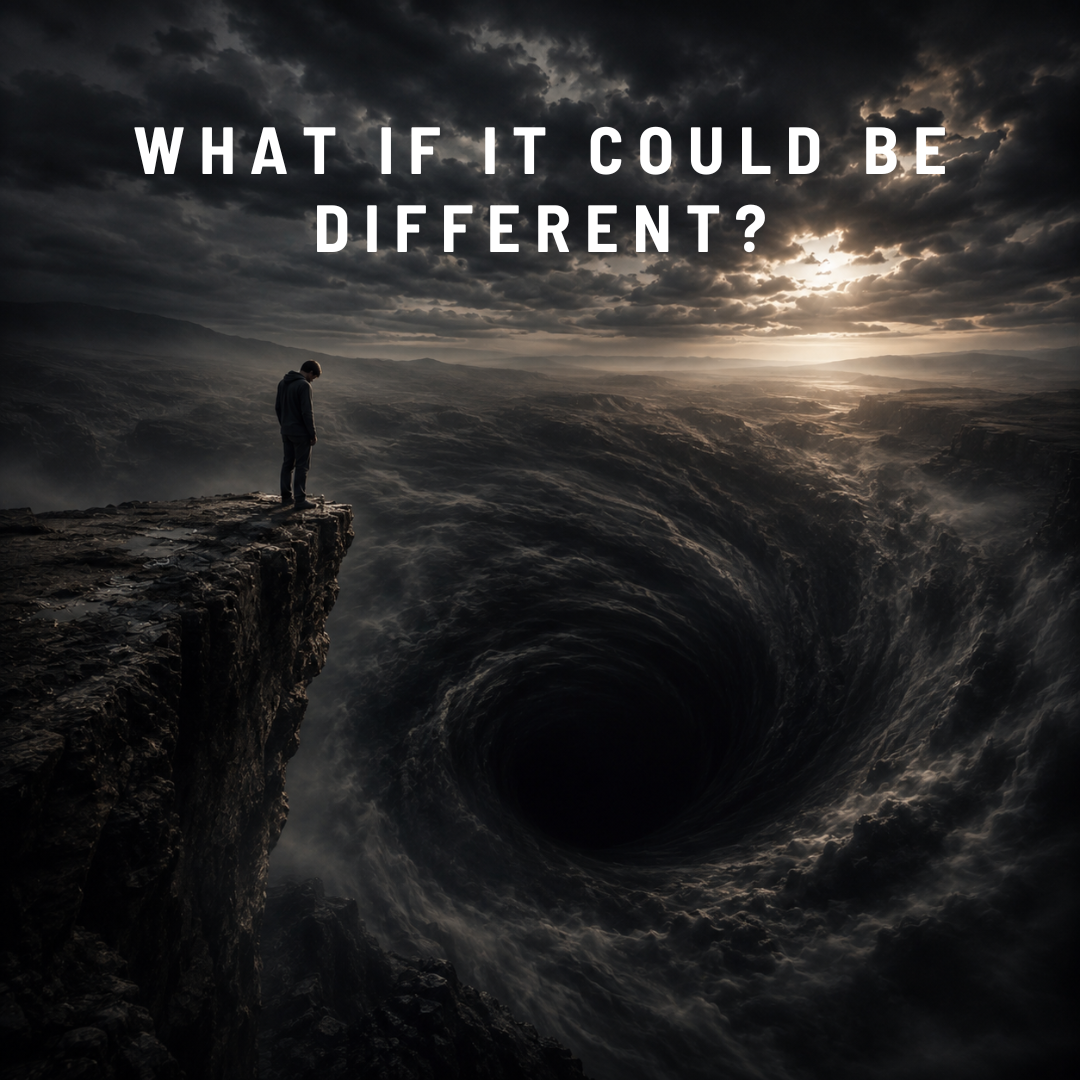
I’m not sharing this story to sensationalise suicide, and I don’t want us to focus on the details of what happened. What stayed with me was the question that came afterwards. What happens inside the human mind when a person becomes so overwhelmed by their circumstances, their thoughts or their emotions that death begins to look like a solution? How does someone reach a point where they can no longer see another possibility?
While I was speaking to this person, I started thinking about what we know about the human brain. I began wondering whether understanding the way our brain perceives the world, predicts the future, responds to stress and develops a sense of control could help us understand something about anxiety, depression and hopelessness. But more importantly, could it also teach us something about how we can deliberately cultivate hope, resilience, gratitude and wellbeing?
That is what I want to explore today.
The Brain Doesn’t Show You Reality — It Predicts It
There’s a famous experiment in psychology. You’re shown a video of people passing a basketball, and your only job is to count the passes. Partway through, a person in a full gorilla suit walks slowly through the middle of the game, thumps their chest, and walks off.
About half the people watching never see the gorilla at all.
It’s not that their eyes miss it. The gorilla is right there on screen. It’s that their brain filters it out, because their attention has been told what matters (the ball) and what doesn’t (everything else). Vision isn’t a camera recording what’s “out there.” It’s closer to a prediction engine: the brain builds a model of what it expects to see, and mostly shows you that model, updating it only when something forces a correction.
This matters far beyond basketball. If the brain’s job is prediction, then what the mind is doing most of the time is not remembering the past, it’s forecasting the future.
The mind is always creating the next moment
Think about how often your mind moves into the future. You might be sitting here listening to me, but your mind may already be thinking about what you have to do later today, what someone said to you yesterday, what might happen at work tomorrow, whether a relationship will work out, whether you’ll succeed at something or whether something might go wrong.
The human mind is constantly creating possible futures.
“What if this happens?”
“What if that doesn’t work?”
“What if they reject me?”
“What if I fail?”
“What if everything changes?”
This ability to imagine the future is one of the great strengths of the human mind. It allows us to plan, prepare, create goals and solve problems before they happen. But that same ability can also become a source of enormous psychological suffering.
Anxiety, for example, often involves anticipating threats. The danger may not be happening right now, but the mind is imagining what could happen, and the body begins responding to that imagined possibility. Your heart may race, your muscles may tense and your thoughts may accelerate, even though the event you’re afraid of hasn’t happened.
Depression is more complicated than simply being sad or thinking negatively about the future. It can involve painful experiences of the past, negative beliefs about oneself and the present, loss of pleasure and motivation, and a profound sense of hopelessness about what lies ahead. A person can begin to feel that nothing will change and that the future contains more of the same pain.
This is why our relationship with the future matters so much.
The future we imagine can influence how we experience the present.
If I believe that tomorrow might be better, I may be able to tolerate a difficult day. But if I become convinced that tomorrow will simply be another version of today, and that nothing I do will make a difference, the same difficult circumstances can become much harder to bear.
And this leads us to another important concept: helplessness.
Why we give up and what brings us back
There’s an old idea in psychology called learned helplessness. In early experiments, animals exposed to a shock they couldn’t escape eventually stopped trying, even later, when escape was possible. Psychologists once believed helplessness itself had to be learned.
Newer research has flipped that on its head: giving up may actually be the brain’s default response to prolonged distress, not something learned, but something that has to be actively switched off. What switches it off is control. When an animal or a person learns that their actions actually change the outcome, a region of the brain associated with regulation and calm becomes active and quiets the panic response. It isn’t the hardship itself that breaks people. It’s the belief that nothing they do matters.
Why our minds naturally focus on the negative
There is another reason this is important. Human beings have evolved to pay close attention to threats.
For much of human history, noticing danger was essential for survival. If you heard something moving in the bushes, there was a survival advantage to considering the possibility that it could be dangerous. Missing a threat could have serious consequences.
Today, most of us don’t live in that kind of environment. Yet the mind still has powerful systems designed to detect threats and negative information.
This is one reason why a single criticism can sometimes stay with us longer than ten compliments. We can have an entire day that goes relatively well, but one embarrassing conversation can occupy our thoughts when we go to bed.
But what if we studied how people flourish?
We need to understand depression, anxiety, trauma, addiction and other forms of psychological suffering. But what if we spend time studying what makes people flourish?
What helps people become resilient? What creates meaningful relationships? What gives people a sense of purpose? What helps people experience positive emotion? What allows people to recover after difficult experiences? What makes life feel worthwhile?
It doesn’t mean pretending that everything is wonderful. It doesn’t mean telling someone who is suffering to “just think positive.” It doesn’t mean ignoring trauma, grief, depression or difficult circumstances.
Instead, it asks us to understand the psychological resources that help human beings live meaningful and fulfilling lives.
It asks us not only, “How do we reduce suffering?” but also, “How do we build wellbeing?”
That distinction is important because mental health shouldn’t only be something we think about when something has gone terribly wrong.
Mental health is more than the absence of illness
If I tell you that you don’t have a particular physical illness, that doesn’t necessarily mean you’re physically healthy. Health can also involve energy, strength, vitality and functioning.
The same principle applies to the mind.
Mental wellbeing isn’t simply the absence of depression or anxiety. It can include positive emotions, meaningful relationships, engagement, purpose, accomplishment, resilience, self-awareness and a sense that your life has value.
This is why I think we need to become more proactive about mental wellbeing and how we feel.
We shouldn’t wait until someone is completely overwhelmed before we start teaching them how to understand their emotions, build meaningful relationships, develop resilience, cultivate gratitude and ask for help.
These are skills that can be developed throughout life.
The mind and the body are connected
There is also an important connection between psychological and physical wellbeing.
Our minds and bodies are not completely separate systems. Chronic stress can affect the body. Sleep affects our psychological functioning. Physical activity can influence mood. Social connection matters for both psychological and physical wellbeing. Learning how to regulate stress can influence how we experience our lives.
This doesn’t mean that positive thinking can cure disease or that optimism guarantees good health. Those would be much stronger claims than the evidence supports.
What we can say is that psychological wellbeing is one part of a much larger picture of health. Our thoughts, emotions, behaviours, relationships and physical bodies interact with one another.
Where psychology meets spirituality
And this is where I want to introduce the spiritual side of the conversation.
When I thought about the person who called me, I could look at what happened through a psychological lens. I could think about hopelessness, anxiety, depression, perception, future thinking, agency and helplessness.
But there was another part of the story that I couldn’t ignore.
That person looked around their room and noticed their altar. They noticed their Sai Satcharita book. Whatever that moment meant to them personally, something connected them back to something beyond the immediate pain they were experiencing.
I don’t believe spirituality should ever be presented as a replacement for professional mental-health support. Some people need real human support, appropriate professional care and safety. Spiritual practice alone should never be used to dismiss serious suffering.
But I do believe spirituality can give us something incredibly valuable: meaning.
Human beings don’t only need pleasure. We need meaning. We need connection. We need a reason to get up in the morning. We need something that tells us that our lives are about more than the problems we are currently experiencing.
For some people, that meaning comes through family. For others, it comes through service, relationships, purpose, faith, meditation or a connection with something greater than themselves.
And sometimes spirituality reminds us of something very simple: the experience we are going through is not necessarily the entirety of who we are.
We can experience pain without becoming the pain.
We can experience fear without being defined by fear.
We can experience hopelessness without knowing that the future will actually be hopeless.
We don’t have to know what happens next
We often think hope means believing that everything will definitely work out. But none of us knows that. A more realistic form of hope is sometimes simply recognising that we don’t know.
You don’t know what your life will look like six months from now. You don’t know who you’ll meet. You don’t know what opportunity might appear. You don’t know what conversation might change something. You don’t know what part of yourself you may discover.
So when the mind says, “This is how my life will always be,” we can challenge it.
We can say, “I don’t actually know that.”
The future I am imagining is a prediction. It is not a fact. And that small distinction can create space for possibility.
Training the mind to notice what is good
This brings me to something very practical.
If our minds naturally pay attention to threats and problems, then we can deliberately train ourselves to notice what is also going well.
One of the exercises is called the Three Blessings exercise.
The practice is very simple. At the end of each day, write down or contemplate three things that went well and then write down why they happened.
They don’t have to be profound.
Maybe you had a meaningful conversation with someone. Maybe you finished something you had been procrastinating on. Maybe you enjoyed your morning coffee. Maybe you laughed. Maybe someone showed you kindness. Maybe you spent five minutes outside and noticed the sunset.
Because gratitude is not simply saying, “Thank you” when something good happens. Gratitude is a way of training our attention. It is the conscious recognition that my life contains more than the problems currently occupying my mind.
Our minds can become so focused on what is missing that we become blind to what is present.
We think about the relationship we don’t have, rather than the people who love us. We think about the money we haven’t made, rather than what we already have. We think about the opportunities we missed, rather than the opportunities still available to us. We think about the one person who rejected us, rather than the many people who have accepted us.
And spiritually, this is a very interesting idea.
Because perhaps one of the functions of gratitude is to shift us from scarcity to awareness.
Instead of constantly asking, “What am I missing?” we begin asking, “What has already been given?”
That doesn’t mean we stop striving. It doesn’t mean we stop having ambitions. It doesn’t mean we accept everything in our lives as it is.
It simply means that we stop allowing the absence of something to make us blind to the presence of everything else.
Gratitude as a Spiritual Practice
There is an even deeper way to look at this.
When I say, “I am grateful for my family,” I’m not only acknowledging that my family exists. I’m acknowledging that my life has been shaped by people, circumstances and experiences that I did not create entirely by myself.
When I say, “I’m grateful for this body,” I’m recognising that there is an extraordinary intelligence involved in simply being alive.
When I say, “I’m grateful for the opportunity to learn,” I’m recognising that knowledge has been passed down to me by people who lived before me.
And when I say, “I’m grateful to God,” or to the Divine, or to the source of life according to my own understanding, gratitude becomes something larger than simply feeling good.
It becomes recognition.
Recognition that I am part of something larger than myself.
Interestingly, a recent academic study looking specifically at Hindu understandings of gratitude found that gratitude can be understood through several relationships of obligation and appreciation — including appreciation for family and ancestors, God, knowledge and the natural world.
So perhaps gratitude isn’t merely:
“I have good things.”
It becomes: “I recognise the web of life that has allowed me to receive what I have.”
That is a much deeper form of gratitude.
Gratitude and the Bhagavad Gita
There is a beautiful connection here with the Bhagavad Gita.
One of the central ideas in the Gita is samatva. Cultivating steadiness and equanimity amid life’s opposites. Krishna’s teaching to Arjuna includes the famous principle that equanimity is yoga.
And I think this gives us a more mature understanding of positive psychology. The goal isn’t to become someone who is happy all the time. The goal isn’t to eliminate sadness. The goal isn’t to make sure that nothing ever goes wrong.
The deeper goal is to develop a mind that doesn’t become completely defined by whichever experience happens to be occurring at this moment.
Today might bring success. Tomorrow might bring failure. Today someone might praise you. Tomorrow someone might criticise you. Today you might feel full of energy. Tomorrow you might feel exhausted. The spiritual question becomes:
Can I remain connected to something deeper than the changing circumstances of my life?
That, to me, is much more profound than simply saying, “Think positively.”
The life we choose to build
So perhaps self-connection isn’t about creating a life where nothing painful ever happens. That’s impossible.
Perhaps self-connection is about developing the capacity to meet life differently.
It is recognising that we have thoughts, but we don’t have to believe every thought we have. We experience emotions, but emotions change. We have difficult days, but a difficult day doesn’t necessarily mean we have a difficult life. We don’t control everything, but we can influence something. We don’t know the future, but we don’t have to assume the worst version of it.
We can experience pain and still experience gratitude. We can struggle and still ask for help. We can lose our way and still find our way back.
Practices like mindfulness can help us observe the mind rather than automatically becoming consumed by every thought. Spirituality can help us explore meaning, connection and our relationship with something greater than ourselves. None of these things mean that life will never hurt.
They give us resources for meeting life when it does.
Coming back to that phone call
I want to come back to that phone call I received.
For a moment, that person couldn’t see a way forward. And then something very small happened. They noticed something in their room. A book. A reminder. A connection to something meaningful.
And then they made a phone call.
We might think that phone call was a small thing.
But sometimes a small thing changes the direction of a life.
That’s why I believe mental wellbeing shouldn’t only be something we think about when we’re in crisis. It is something we can cultivate every day through our relationships, our habits, our physical health, our spirituality, our self-awareness, our willingness to ask for help, and even something as simple as taking a few minutes each night to recognise what is good.
Our minds are constantly telling us a story about our lives. We may not be able to control every chapter, and we certainly cannot control everything that happens to us. But we can become more conscious of the stories we tell ourselves. We can question our predictions. We can build our sense of agency. We can train our attention. We can cultivate gratitude. We can reconnect with meaning.
And sometimes, when we cannot yet see a beautiful future, we don’t need to convince ourselves that everything is going to be okay.
We simply need to leave enough space for the possibility that it could be.
And sometimes, that’s where hope begins.
Hope Isn’t Knowing It Will Be Okay — It’s Not Knowing It Won’t
•
Leave a Reply